

Dog Days: An Evolution Story by Farrah J
- May 19, 2016
- 4 min read
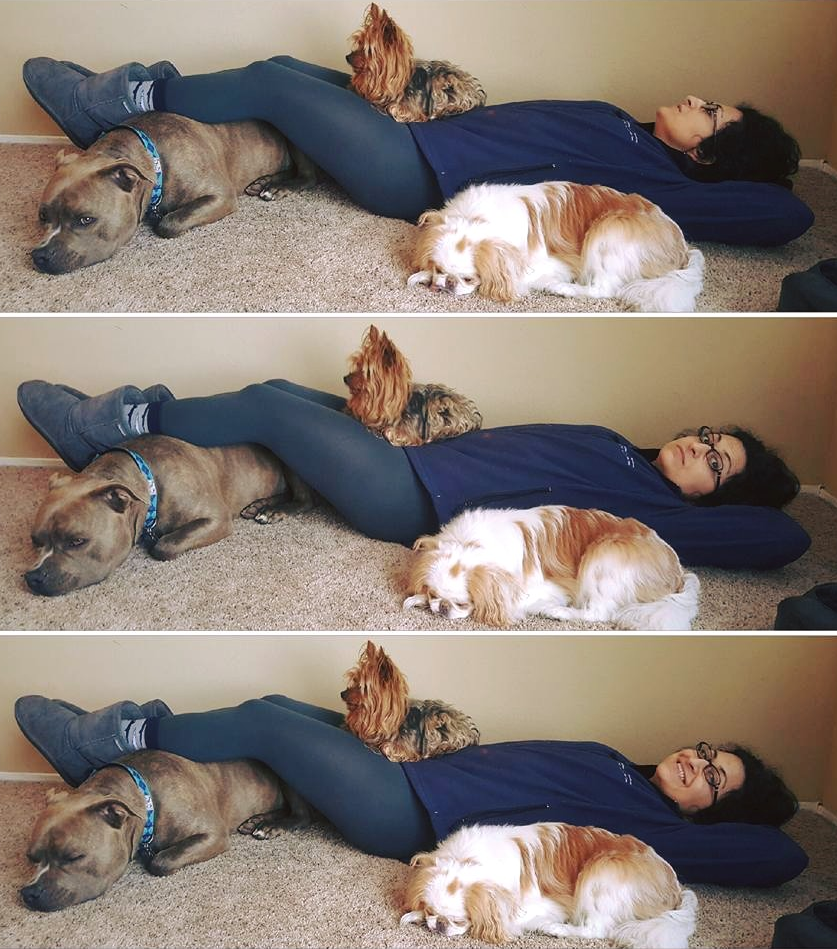
2016 Copyright. Photo by Stacy Rapoport. From left, Tiger, Eleanor, Miso, and Farrah.
"The creature who makes me stronger and more compassionate—the one who takes me out of myself and able to give to others has ensured that it will never be the same. She gave me the option to get out of my own way and enjoy life. She filled that empty hole. And that is how I went from dog-hater/fearer to canine lover and best friend to the pooches."
A sincere recognition to my dear friend for writing a most candid personal account about the challenges of humanity and the soulful bond between dog and human.
Dog Days
an evolution story by Farrah J
My transition from child to adult occurred in a culture of sterilization. My Iranian parents instilled a strict principle of cleanliness and made it clear that animals were the main culprits to violate it. I avoided entering a house with a dog. And if I did, I would always stick my hands in the air at the first sight of the beast, as if it were a bank robber in the old west and I was at the wrong place at the wrong time.
Another thing about my childhood: I was diagnosed with bipolar depression at age 12. A relentlessly cold and gnawing feeling all over my body for as long as I can remember. And it had everything to do with being lonely. It’s not so much that I was alone, as people came and went, suitcases were packed and unpacked, meals eaten, and jokes told, but I was lonelier than that guy in the lighthouse…or whatever that saying is.
I trudged through my adolescence, teen years, and early 20s with a hole inside of me which I filled with all the wrong things—mostly men and booze. This hit its high point at age 29 when I was dumped by the one who I thought was “the one”. And felt like death inside. I agreed to go to a party for fear of being alone due to the suicidal depression resurfacing at every hour. I was afraid to be alone. And while outside with a glass of wine, cigarette, and misanthropic fury, a little white puffy creature jumped on my lap. Suddenly, as if by magic, the darkness, self-pity, and sadness dissipated as soon as this mongrel helped itself to my lap. I wasn’t even thinking about the germs; all I could think was that I wanted this feeling all the time.
A few weeks later, I decided to invite a scrappy Yorkshire Terrier into my life. I named her Eleanor Roosevelt, because I wanted to always remember something that ER wrote: no one can make you feel inferior without your consent. The creature who makes me stronger and more compassionate—the one who takes me out of myself and able to give to others has ensured that it will never be the same. She gave me the option to get out of my own way and enjoy life. She filled that empty hole. And that is how I went from dog-hater/fearer to canine lover and best friend to the pooches. So, Eleanor and I sign off from my cozy bed—in my pajamas, and definitely after I’ve had my bath. Some things don’t change. And that’s ok, too. - Farrah J
Farrah's shift into dog loving territory comes to me as no surprise. How can one battle and resist the one creature that will love you more than yourself. Dogs provide us with a genuine and complete concept of unconditional love.
We see these benefits applied in numerous animal therapy curriculum. Exposure to non-human animals can improve pleasure receptors and cognitive sensory input function in multiple audiences. We see this in children and adults on the spectrum, PTSD sufferers, seniors facing varying degrees of cognitive degeneration, and the list goes on. Our affinity to touch, hugs, and togetherness is rooted into our own survival.
The history of social animals originates from various environmental needs and demands. One major key component is the naturally occurring hormone oxytocin. This love molecule was a major facilitator in the development of pair bonding, a.k.a, social beings.
The companionship of an animal can amplify the release of endorphins; pleasure neurotransmitters responsible for the positive and almost euphoric sensation felt throughout the body. For example, think of that amazing feeling you have right after exercising. Or better yet when your dog gazes up into your eyes and paws at your body for attention, “love me”. They bring us joy in an ever increasing life of technological intimacy. Most of us live in a world secluded from face to face interaction while others, although surrounded by friends and family, suffer alone.
It’s no wonder we are so fond of our furry creatures! Are we better adapted to have non-human animals coexist among us? Let's expand the notion of animal therapy to all human audiences. Please comment below and join the conversation!
Comments